CPQ in CRM has become essential for businesses that sell configurable products or services and need faster, more accurate quoting in 2026. When pricing rules, product options, discounts, and approvals are handled manually, teams lose time, create errors, and slow down the sales cycle.
A CPQ system helps automate configuration, pricing, and quote generation so sales teams can build correct offers faster, reduce friction, and protect margins. This is especially important in B2B sales, SaaS, manufacturing, and service-based businesses where deal complexity can grow quickly.
In this guide, you’ll see how CPQ software works inside a CRM environment, how it improves accuracy and revenue, which tools lead the market in 2026, and how to implement it without creating unnecessary complexity.
What Is CPQ in CRM and How It Works
CPQ stands for Configure, Price, Quote. Inside a CRM, it is the system that helps sales teams build the right product or service combination, apply the correct pricing rules, and generate an accurate quote without doing everything manually.
It is mainly used when offers are not simple fixed-price products. If a business sells custom plans, bundles, subscriptions, add-ons, usage tiers, service packages, or products with multiple configuration options, CPQ in CRM helps control that complexity.
How CPQ Works
1. Configure
The rep selects the product, plan, or service package based on the customer’s needs. The CPQ system applies configuration rules to make sure the selected options are valid.
- compatible products can be combined
- invalid combinations are blocked
- required add-ons or dependencies are suggested
This reduces configuration mistakes before pricing even starts.
2. Price
Once the offer is configured, the system calculates the correct price automatically using predefined rules.
- base pricing
- volume discounts
- contract terms
- regional pricing
- custom discount limits
- tax or billing logic when relevant
This prevents reps from using outdated spreadsheets or inconsistent discounting.
3. Quote
After configuration and pricing are validated, the system generates a quote or proposal automatically. In many setups, the quote can include product details, pricing breakdown, terms, approvals, and customer-ready formatting.
This makes the quoting process faster and more consistent.
How CPQ Fits Inside CRM
When CPQ software is connected to the CRM system, it uses deal, account, and opportunity data already stored in the pipeline.
That means the rep can:
- build quotes directly from an opportunity
- use customer-specific pricing or contract rules
- send the quote without leaving the CRM
- track quote status as part of the sales process
This keeps pricing, quoting, and deal management in the same workflow.
Why Businesses Use CPQ
Without CPQ in CRM, teams often rely on spreadsheets, manual approvals, and custom quote documents. That creates slow turnaround, pricing inconsistency, and avoidable errors.
With CPQ, the process becomes:
- faster
- more accurate
- easier to scale
- more controlled from a margin perspective
Key Takeaway
CPQ in CRM is the system that automates how sales teams configure offers, calculate pricing, and generate quotes. It is most valuable when products, pricing, or contract terms are too complex to manage manually without creating delays or errors.
Key Benefits of CPQ: Accuracy, Speed, and Revenue Growth
CPQ software creates value by reducing quote errors, speeding up the sales cycle, and improving how pricing decisions affect revenue. Its biggest advantage is control: the sales team can move faster without losing pricing accuracy or margin discipline.
1. Higher Pricing Accuracy
Manual quoting often leads to wrong prices, outdated discounts, and inconsistent deal terms. A CPQ system applies approved pricing rules automatically, so quotes are built with the right numbers from the start.
This helps prevent:
- incorrect discounts
- outdated price lists
- margin loss from manual pricing mistakes
- approval issues caused by non-standard quotes
2. Fewer Configuration Errors
When products or services have dependencies, bundles, add-ons, or usage tiers, reps can easily build invalid offers manually. CPQ in CRM uses configuration rules to block incompatible combinations and guide reps toward valid options.
This reduces rework and avoids sending incorrect proposals to prospects.
3. Faster Quote Creation
One of the biggest CPQ benefits is speed. Instead of building quotes from scratch, reps can configure the offer, apply pricing automatically, and generate a proposal in much less time.
This shortens the delay between customer interest and quote delivery, which helps keep momentum in the sales process.
4. Shorter Sales Cycles
When quotes are generated faster and with fewer approval issues, deals move through the pipeline more efficiently. That is especially important in B2B sales where delays in pricing or proposals can slow down the close.
5. Better Margin Control
CPQ systems help protect revenue by enforcing discount thresholds, approval rules, and pricing logic. This gives businesses more control over profitability while still allowing sales teams to move quickly.
6. More Consistent Proposals
CPQ makes quoting more standardized. Instead of each rep using different templates, pricing logic, or quote formats, the business creates a more consistent buying experience.
That improves professionalism and reduces internal confusion.
7. Easier Scaling for Sales Teams
As product catalogs, pricing models, and sales volume grow, manual quoting becomes harder to manage. CPQ software makes the process easier to scale because it reduces reliance on spreadsheets, tribal knowledge, and manual checks.
8. More Revenue Opportunities
Because CPQ can guide reps toward valid bundles, add-ons, upgrades, and better-fit offers, it can also improve average deal value. Faster, cleaner quoting also means fewer stalled opportunities and more chances to close.
Key Takeaway
The main benefits of CPQ are clear: better accuracy, faster quoting, stronger margin control, and more scalable sales execution. When pricing and configuration are automated correctly, businesses reduce errors and create a smoother path from opportunity to revenue.
How CPQ Eliminates Pricing and Configuration Errors
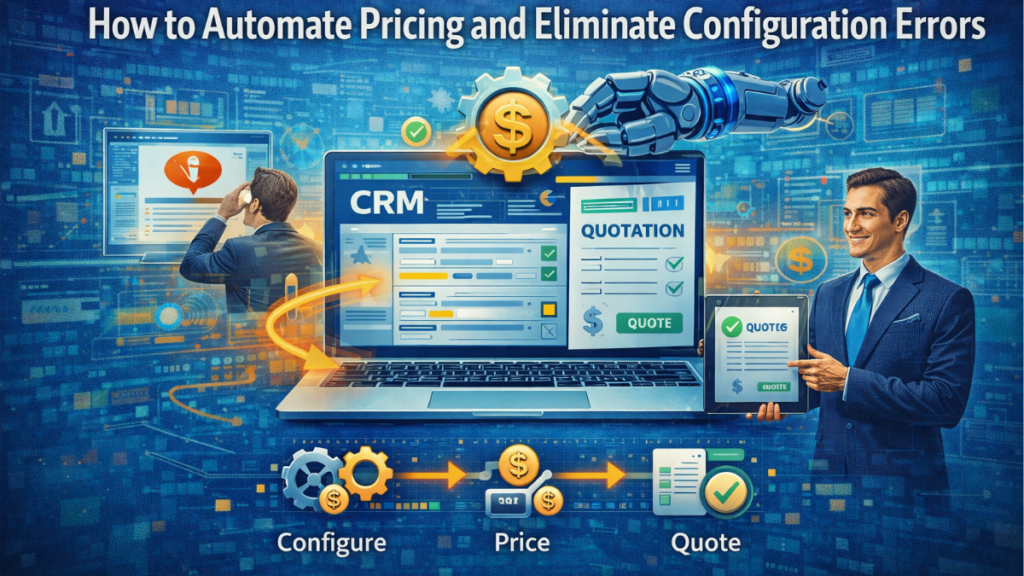
CPQ software eliminates most pricing and configuration errors by replacing manual decisions with predefined rules. Instead of letting each sales rep calculate pricing, combine products, and build quotes on their own, the CPQ system controls what can be sold, how it can be sold, and at what price.
1. It Uses Product Configuration Rules
In manual quoting, reps can combine products, add-ons, or service options incorrectly. CPQ prevents this by using rules that allow only valid combinations.
- blocks incompatible options
- requires mandatory components
- guides reps toward valid bundles
This removes a major source of quote errors before pricing is applied.
2. It Applies Standardized Pricing Logic
Pricing mistakes often happen when reps use old spreadsheets, incorrect discounting, or inconsistent deal logic. A CPQ system applies approved pricing rules automatically.
- base price rules
- volume pricing
- contract length pricing
- regional or customer-specific pricing
- discount thresholds
This keeps quotes consistent and reduces margin loss.
3. It Controls Discounts and Approvals
One common problem in manual sales quoting is that reps offer discounts they should not approve on their own. CPQ in CRM can enforce discount limits and trigger approval workflows when pricing goes outside allowed rules.
This protects revenue and reduces non-standard deals.
4. It Removes Spreadsheet Dependency
Spreadsheets create errors because they are easy to change, duplicate, or leave outdated. CPQ removes that dependency by keeping pricing and configuration logic inside a controlled system instead of scattered files.
5. It Keeps Product and Pricing Updates Centralized
When pricing, bundles, or product rules change, manual teams often keep using old versions. With CPQ software, updates are managed centrally, so the sales team works from the latest logic instead of outdated documents.
6. It Reduces Human Interpretation
Complex quotes often fail because reps interpret pricing rules differently. CPQ reduces that ambiguity by turning pricing logic into system rules. The rep still sells, but the platform handles the calculation and validation.
7. It Generates Accurate Quotes Automatically
Once configuration and pricing are validated, the system creates the quote using the correct products, totals, terms, and structure. This reduces mistakes in the final customer-facing document.
Key Takeaway
CPQ eliminates pricing and configuration errors by standardizing product rules, automating pricing logic, controlling discounts, and removing manual quoting steps. The result is a faster quoting process with fewer mistakes, cleaner approvals, and better revenue protection.
Automating Quotes and Proposals with CPQ Systems
CPQ systems automate quotes and proposals by turning a manual document process into a rule-based workflow. Instead of building each quote from scratch, the system pulls the right products, pricing, discounts, and customer data from the CRM and generates the document automatically.
1. Quote Creation Becomes Faster
Without CPQ software, reps often prepare quotes manually using spreadsheets, templates, and copied pricing data. That slows down the sales cycle and increases errors.
With CPQ, the rep configures the offer, the system calculates the price, and the quote is created automatically in a ready-to-send format.
2. Proposal Content Stays Consistent
Manual proposals often vary too much between reps. A CPQ system standardizes structure, pricing layout, product descriptions, terms, and branding so each proposal follows the same logic and presentation.
This reduces confusion and makes the sales process look more professional.
3. Customer and Deal Data Fills Automatically
When CPQ is connected to the CRM system, it can pull account details, opportunity data, contract terms, and product selections directly into the quote or proposal.
This avoids manual re-entry and reduces document mistakes.
4. Pricing and Discounts Are Applied Automatically
One of the main benefits of quote automation is that pricing rules are enforced before the document is generated. That means the proposal already reflects approved pricing logic, valid discounts, and the correct totals.
This protects margins and avoids rework.
5. Approval Workflows Can Be Built In
If a quote exceeds discount limits or includes non-standard terms, the CPQ workflow can send it for approval before the proposal is finalized. This keeps control inside the process instead of relying on informal checks.
6. Reps Can Send Proposals Sooner
Faster quote generation means prospects receive offers sooner after a call, demo, or pricing discussion. That helps maintain momentum and reduces the delay between interest and decision.
7. Updates Are Easier When Deals Change
If the customer wants to change quantity, term length, product mix, or add-ons, the rep can update the configuration and regenerate the quote quickly. This is much faster than rebuilding documents manually.
Key Takeaway
Automating quotes and proposals with CPQ improves speed, consistency, and accuracy. It helps sales teams deliver cleaner offers faster while keeping pricing, approvals, and document quality under control.
How CPQ Integrates with CRM and Other Business Tools
CPQ creates more value when it is connected to the CRM and the rest of the business stack. On its own, CPQ handles configuration, pricing, and quote generation. When integrated, it becomes part of a larger workflow that connects sales, finance, operations, and customer management.
1. CPQ Uses CRM Data to Build Quotes
When CPQ integrates with CRM, it can pull account data, contact information, deal details, product interest, and opportunity stage directly from the sales pipeline.
This means reps do not need to re-enter the same information when building a quote. The quote starts with data already stored in the CRM, which reduces errors and saves time.
2. CRM Keeps Quote Activity Inside the Sales Process
Once CPQ is connected, quote creation becomes part of the opportunity workflow instead of a separate manual task.
- quotes can be generated from an existing deal
- quote status can be tracked inside the CRM
- sales teams can see which proposal was sent and when
- managers get better pipeline visibility
This keeps quoting tied to the actual sales cycle.
3. CPQ Connects with ERP and Billing Systems
Many businesses connect CPQ software to ERP, invoicing, or billing tools so approved quotes can move into fulfillment and finance workflows.
This helps with:
- order creation
- invoice generation
- subscription setup
- revenue tracking
Without this integration, teams often have to re-enter deal data after the quote is accepted.
4. It Supports Approval Workflows Across Teams
Complex deals often need approvals from finance, sales managers, or legal. CPQ can connect with approval systems, email tools, or internal workflow tools to route non-standard quotes automatically.
This reduces delays and makes approval logic more consistent.
5. It Connects with E-Signature and Document Tools
After a proposal is generated, CPQ can send it to document and e-signature tools so the customer can review and sign without breaking the process.
This shortens the path from quote to closed deal.
6. It Improves Reporting Across Systems
When CPQ, CRM, and finance tools are connected, businesses get better visibility into:
- quote volume
- approval delays
- win rates by quote type
- discount patterns
- revenue by product or configuration
This makes pricing and sales decisions easier to optimize.
Key Takeaway
CPQ integration with CRM and other business tools turns quoting into part of a connected revenue workflow. It reduces duplicate work, improves visibility, and helps sales, finance, and operations move faster with fewer errors.
Using AI in CPQ for Upselling and Cross-Selling
AI in CPQ helps sales teams increase deal value by recommending better-fit upgrades, add-ons, and product combinations during the quoting process. Instead of relying only on rep intuition, the system uses data, patterns, and rules to surface stronger upselling and cross-selling opportunities.
1. AI Recommends Better Product Combinations
When a rep configures an offer, AI-powered CPQ can suggest related products, premium tiers, service add-ons, or bundles based on what similar customers buy.
This helps the rep expand the quote without guessing.
2. AI Uses Customer and Deal Data
Because CPQ is connected to the CRM, AI can use data such as:
- industry
- company size
- purchase history
- current product mix
- deal size
- buyer behavior
That makes cross-sell recommendations more relevant than generic add-on suggestions.
3. It Helps Reps Upsell Without Overcomplicating the Quote
A common problem in manual selling is that reps either miss expansion opportunities or overload the proposal with irrelevant options. AI in CPQ helps narrow the recommendations to the ones most likely to fit the customer and the deal context.
4. It Can Prioritize High-Value Offers
Some CPQ systems use AI to rank which upgrades or bundles have the best chance of improving revenue without hurting close probability. That helps reps focus on the options with the best commercial value.
5. It Supports Guided Selling
AI CPQ can guide the rep through the quote by recommending the next best option based on the current configuration. This is especially useful when product catalogs are large or pricing models are complex.
It reduces missed opportunities and makes the sales process more consistent across the team.
6. It Improves Average Deal Value
When good recommendations appear inside the quoting flow, it becomes easier to increase:
- average order value
- contract value
- product adoption
- attachment rate for add-ons
This is where AI-driven upselling and cross-selling creates direct revenue impact.
7. It Learns from Sales Patterns Over Time
As more quotes and closed deals move through the system, AI models can improve which offers they recommend. That makes the system more useful over time, especially in businesses with repeatable deal patterns.
Key Takeaway
Using AI in CPQ for upselling and cross-selling helps sales teams increase quote value with more relevant recommendations, better bundle logic, and less guesswork. The result is a smarter quoting process that can improve both deal quality and revenue per opportunity.
Best CPQ Tools and Software in 2026
The best CPQ tools in 2026 are the ones that automate configuration, pricing, approvals, and quote generation without making the sales process harder to manage. The right platform depends on your deal complexity, CRM stack, approval logic, and how much control you need over subscriptions, bundles, and margin protection.
1. Salesforce Revenue Cloud
Salesforce Revenue Cloud is one of the strongest options for complex CPQ and enterprise quote-to-cash workflows. Salesforce positions it as a revenue management platform with built-in CPQ capabilities, guided selling flows, bundles, discounting rules, approvals, and broader revenue lifecycle support. Salesforce also lists Revenue Cloud Advanced as a full quote-to-cash platform.
Best for: Enterprise sales teams, complex pricing models, multi-step approvals, large product catalogs.
2. HubSpot CPQ
HubSpot CPQ, available through Commerce Hub, is a strong fit for teams that want quoting and CRM workflows in one cleaner system. HubSpot’s official documentation highlights AI-generated quotes, customizable quote templates, tiered pricing, quote reporting, approvals, and e-signature support tied directly to deal data.
Best for: SMBs, SaaS teams, and businesses already using HubSpot for sales and marketing.
3. DealHub CPQ
DealHub is built around AI-powered CPQ and revenue workflows. Its official materials emphasize adaptive pricing models, dynamic bundles and discounts, automated approval workflows, real-time deal visibility, and support for quoting across different sales motions.
Best for: B2B sales teams with complex deal structures, subscription pricing, usage-based models, or stronger deal desk needs.
4. PandaDoc CPQ
PandaDoc CPQ is a strong option for businesses that care a lot about fast document generation, approvals, and quote-to-signature flow. PandaDoc says its CPQ supports pricing rules, approvals, CRM-connected quote generation, and quote automation tied closely to proposal and e-signature workflows.
Best for: Teams that want lighter-weight CPQ tied closely to proposals, documents, and e-signature.
How to Think About the Best Option
- Best for enterprise complexity: Salesforce Revenue Cloud
- Best all-in-one for HubSpot users: HubSpot CPQ
- Best for modern B2B deal complexity: DealHub
- Best for quote-to-document speed: PandaDoc CPQ
What to Check Before Choosing
- configuration rules for bundles, dependencies, and product logic
- pricing automation for discounts, term logic, and approvals
- CRM integration quality
- support for subscriptions, usage pricing, or custom contracts
- quote template flexibility and e-signature flow
- admin effort needed to maintain pricing rules over time
Key Takeaway
The best CPQ software in 2026 is not just the one with the most features. It is the one that fits your pricing complexity, keeps quote generation accurate, and stays manageable for your sales team. For large and complex environments, Salesforce Revenue Cloud stands out. For simpler all-in-one execution, HubSpot CPQ is strong. For B2B quoting depth, DealHub is a serious option. For proposal-driven workflows, PandaDoc CPQ fits well.
Step-by-Step: How to Implement CPQ in Your CRM with Real Examples
Implementing CPQ in your CRM works best when you start with pricing logic, product structure, and approval rules before touching automation. If that base is messy, the system will only automate mistakes faster.
1. Define What You Sell
Start by organizing your products, plans, services, bundles, add-ons, and contract options.
- core products
- optional add-ons
- required dependencies
- subscription terms
- service tiers
Example: A SaaS company sells three plans, onboarding as an add-on, extra seats, and annual or monthly billing.
2. Build Configuration Rules
Set rules for what can and cannot be sold together.
- block incompatible options
- require mandatory components
- suggest valid bundles
Example: Enterprise support can only be added to Pro and Enterprise plans, not Basic.
3. Set Pricing Logic
Define how the CPQ system should calculate pricing.
- base prices
- volume discounts
- term-based pricing
- customer-specific pricing
- discount limits
Example: Annual billing gets a 15% discount, but discounts above 20% require manager approval.
4. Connect CPQ to CRM Opportunities
Make sure quotes are generated from deals already inside the CRM. This lets the system pull account data, contact details, and opportunity context automatically.
Example: A rep opens an opportunity in the CRM, clicks “Create Quote,” and CPQ loads the account, selected products, and pricing rules.
5. Create Approval Workflows
Set approval rules for non-standard pricing, special terms, or large discounts.
Example: If the quote includes a discount above 20% or custom payment terms, it is routed to the sales manager before sending.
6. Build Quote and Proposal Templates
Create standardized templates so every quote looks consistent and includes the right pricing breakdown, terms, and branding.
Example: All quotes automatically include company details, product summary, billing term, total price, and legal terms.
7. Test with Real Sales Scenarios
Before launching, run common deal types through the system.
- simple quote
- bundle with add-ons
- discounted quote
- renewal or expansion deal
Example: A rep tests a 50-seat quote with onboarding, annual billing, and a discount request to confirm pricing and approval logic work correctly.
8. Train Sales on the Workflow
The team needs to know how to configure offers, trigger approvals, update quotes, and send proposals without going outside the process.
Example: Reps stop using side spreadsheets and create all new quotes directly inside the CRM + CPQ flow.
9. Launch with Core Use Cases First
Do not start with every pricing edge case. Begin with the most common deals, then expand rules later.
Example: A service company launches CPQ first for standard packages, then later adds custom enterprise packages and renewal logic.
10. Review Errors, Delays, and Quote Performance
After launch, track where quotes fail, where approvals slow deals, and which configurations cause friction.
Watch metrics like:
- quote turnaround time
- approval delays
- error rate
- average deal value
- quote-to-close rate
Key Takeaway
To implement CPQ in your CRM, start with product rules, pricing logic, approvals, and templates. Then connect everything to the sales pipeline, test real scenarios, and expand gradually. That is how you reduce quote errors without making the process harder to use.
Common CPQ Mistakes and How to Choose the Right Solution
CPQ creates value when it simplifies quoting, protects pricing logic, and reduces errors. It becomes a problem when businesses overbuild it, feed it bad pricing rules, or choose a tool that does not match their sales model.
Common CPQ Mistakes
1. Implementing CPQ Before Cleaning Product and Pricing Logic
If your catalog, bundles, discount rules, or contract logic are messy, CPQ software will automate that mess. The result is slow setup, confusing workflows, and inaccurate quotes.
How to avoid it: Standardize products, pricing structure, dependencies, and approval thresholds before implementation.
2. Overcomplicating the First Version
Many teams try to include every edge case, exception, and custom scenario from day one. That makes the system harder to launch and harder for reps to use.
How to avoid it: Start with the most common quote scenarios, then expand after the core flow works well.
3. Choosing a Tool That Is Too Big or Too Limited
A complex enterprise CPQ system can be a bad fit for a simple sales team. A lightweight quoting tool can also fail if your pricing model includes bundles, subscriptions, approvals, or custom configurations.
How to avoid it: Match the tool to your real quoting complexity, not to brand reputation alone.
4. Ignoring CRM and Workflow Integration
If CPQ sits outside the CRM or does not connect well with approvals, billing, or e-signature tools, reps end up doing duplicate work and the process breaks.
How to avoid it: Choose a solution with strong CRM integration and clean workflow connections.
5. Weak Approval Logic
If discount rules and exception approvals are unclear, reps either get blocked too often or send risky quotes too easily.
How to avoid it: Define clear thresholds for discounts, custom terms, and non-standard configurations.
6. Poor Sales Adoption
Even a strong CPQ setup fails if reps avoid it and go back to spreadsheets or manual quote documents.
How to avoid it: Keep the quoting flow fast, train the team properly, and remove side processes that compete with CPQ.
7. Forgetting Ongoing Maintenance
Products, pricing, and bundles change. If the system is not maintained, quote accuracy drops over time.
How to avoid it: Assign ownership for updates to pricing rules, templates, product logic, and approvals.
How to Choose the Right CPQ Solution
1. Start with Your Pricing Complexity
Ask how complex your quoting process really is.
- simple fixed pricing
- bundles and add-ons
- subscription terms
- usage-based pricing
- customer-specific pricing
- multi-step approvals
The more complexity you have, the more control the solution needs.
2. Check Configuration and Pricing Rule Depth
A good CPQ solution should handle product dependencies, valid combinations, discount controls, and pricing logic without relying on manual workarounds.
3. Evaluate CRM Fit
The tool should work naturally with your CRM system, not feel like a disconnected extra layer. Reps should be able to create, edit, and track quotes inside the sales workflow.
4. Review Quote and Approval Workflow Quality
Check whether the solution supports:
- quote generation
- proposal templates
- approval routing
- document updates
- e-signature flow
If these steps are weak, the quoting process still stays slow.
5. Consider Admin and Maintenance Load
Some CPQ tools are powerful but heavy to maintain. If your team cannot manage rule updates easily, the system becomes fragile.
Choose a level of control your business can actually maintain.
Key Takeaway
The biggest CPQ mistakes come from bad inputs, overcomplex design, weak adoption, and poor tool fit. The right solution is the one that matches your pricing logic, integrates cleanly with your CRM, and stays usable for both sales and admin teams over time.
Final Guide: How to Automate Pricing and Eliminate Errors with CPQ
To automate pricing and eliminate quote mistakes with CPQ, you need a system that controls three things well: product logic, pricing rules, and quote generation. When those three areas are standardized inside the CRM, sales teams can move faster without relying on spreadsheets, manual checks, or inconsistent discounting.
1. Standardize What Can Be Sold
Start by defining valid products, bundles, add-ons, and dependencies. This is what allows the CPQ system to block invalid combinations and guide reps toward correct configurations.
2. Automate Pricing Rules
Move pricing logic into the system:
- base prices
- volume discounts
- term-based pricing
- customer-specific pricing
- discount thresholds
This removes manual pricing errors and protects margins.
3. Control Exceptions with Approval Workflows
Not every quote should be approved automatically. Use rules for discounts, special terms, and non-standard configurations so exceptions go through the right approval path.
4. Generate Quotes from CRM Opportunities
When CPQ integrates with CRM, reps can create quotes directly from deals using account and opportunity data already stored in the pipeline. That reduces re-entry, speeds up quote creation, and keeps activity visible inside the sales process.
5. Standardize Proposal Output
Use templates so every quote includes the correct structure, pricing breakdown, terms, and branding. This improves consistency and reduces errors in customer-facing documents.
6. Use AI and Guided Selling Where It Adds Value
If your CPQ software supports it, use AI to recommend bundles, add-ons, and upgrade paths. This helps improve deal value without making reps guess which offer fits best.
7. Start with Core Use Cases, Then Expand
Do not launch with every edge case. Start with your most common quote scenarios, validate the workflow, and then add more advanced logic as needed.
8. Track the Right Performance Metrics
To know whether CPQ is working, measure:
- quote turnaround time
- pricing error rate
- approval delays
- quote-to-close rate
- average deal value
- discount consistency
This shows whether automation is actually improving speed and revenue quality.
Key Takeaway
The best way to automate pricing and eliminate errors with CPQ is to replace manual quoting with controlled rules inside the CRM. When product configuration, pricing logic, approvals, and quote generation all work in one system, sales becomes faster, more accurate, and easier to scale.
Written by Ana Moedano Rivera